

On-page SEO plays a critical role in how search engines understand and rank web pages. Even small mistakes in on-page optimization can limit visibility, reduce traffic quality, and weaken long-term growth. Many businesses invest time and resources into SEO but still fail to see results because of avoidable errors made during content and page optimization.
Understanding these mistakes helps businesses improve performance without relying on risky shortcuts.
Ignoring Search Intent
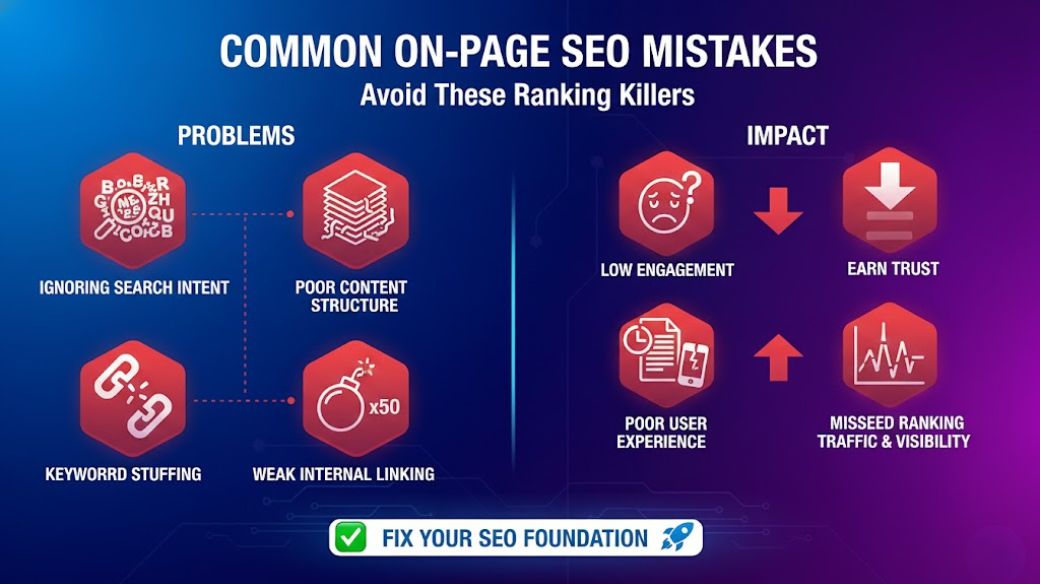
One of the most common on-page SEO mistakes is focusing on keywords without understanding search intent. Search engines aim to provide results that best match what users are actually looking for. Pages that target keywords but fail to answer the underlying question often struggle to rank or maintain visibility.
Content should be aligned with whether users are seeking information, comparisons, or solutions. Pages that miss this alignment may attract traffic briefly but fail to deliver engagement.
Poor Content Structure
Unstructured content makes it difficult for both users and search engines to process information. Long blocks of text, missing headings, or unclear sections reduce readability and usability.
Well-structured pages use logical headings, short paragraphs, and clear formatting. This improves user experience and helps search engines understand the main topics covered on the page.
Overuse of Keywords
Keyword stuffing remains a frequent issue. Repeating the same phrase excessively does not improve rankings and often harms content quality. Search engines are advanced enough to understand context and synonyms without forced repetition.
Natural language, supported by related terms, creates better readability and stronger relevance signals than over-optimized text.
Weak Internal Linking
Many websites fail to connect related pages effectively. Internal links help search engines discover content, understand topic relationships, and distribute authority across the site.
Without proper internal linking, valuable pages may remain isolated and underperform despite strong content.
Neglecting Page Experience
User experience is closely tied to on-page SEO. Slow loading times, mobile usability issues, and confusing layouts can reduce engagement. Even high-quality content may struggle if users leave quickly due to poor page experience.
Search engines monitor user behavior, and consistent dissatisfaction can negatively affect rankings over time.
Missing or Poorly Optimized Meta Elements
Meta titles and descriptions influence both visibility and click-through rates. Pages with missing, duplicated, or unclear meta information often fail to attract clicks even when rankings are decent.
Clear, relevant meta elements help search engines interpret page purpose and encourage users to engage with the result.
Failing to Update Content
Outdated content weakens credibility. Search engines favor pages that remain accurate and relevant. Businesses that publish content once and never revisit it often lose visibility as competitors update their information.
Regular content updates signal reliability and long-term value.
Final Thoughts
On-page SEO mistakes are often subtle but impactful. By focusing on search intent, structure, user experience, and consistency, businesses can improve rankings without relying on aggressive tactics. Correcting these issues creates a stronger foundation for sustainable organic growth.