


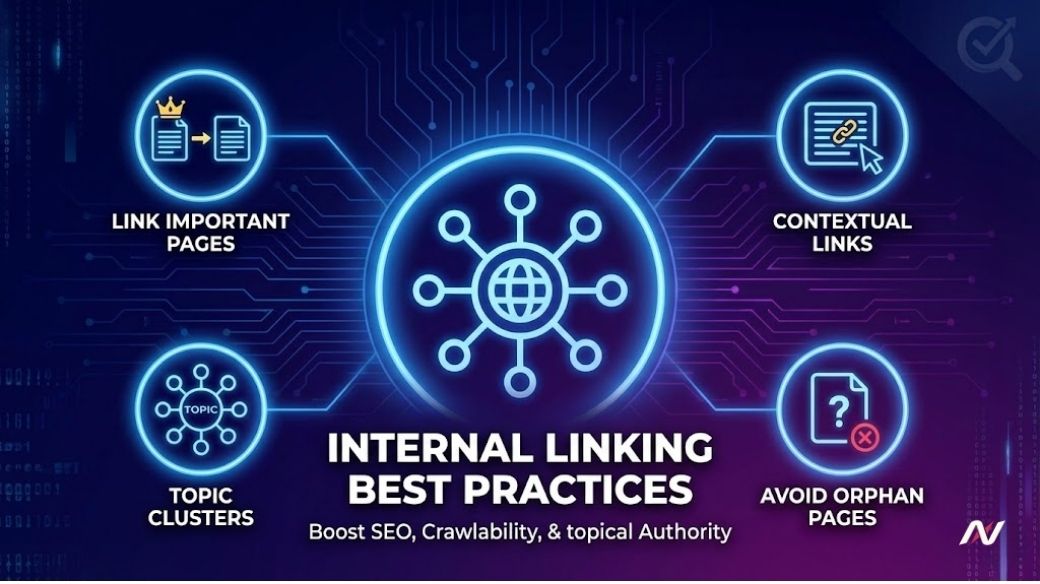
Internal linking is one of the most overlooked elements of SEO, yet it plays a major role in how search engines understand and evaluate a website. While backlinks help establish external trust, internal links shape how authority flows within a site and how content relationships are interpreted.
When done correctly, internal linking improves crawlability, strengthens topical relevance, and enhances user experience.
What Internal Linking Means in SEO
Internal links are links that connect one page of a website to another page on the same domain. These links help users navigate content and allow search engines to discover, crawl, and contextualize pages.
From an SEO perspective, internal links:
- Guide search engines to important pages
- Define relationships between topics
- Distribute authority across content
- Support indexing and ranking consistency
Without a clear internal linking strategy, even strong pages can underperform.
Why Internal Linking Matters
Search engines do not evaluate pages in isolation. They assess how pages connect and support one another within a broader content system.
Effective internal linking helps:
- Reduce crawl depth for key pages
- Prevent orphaned content
- Strengthen topical clusters
- Improve ranking stability
For users, internal links make content easier to explore and understand, which indirectly supports SEO through engagement signals.
Link Important Pages More Frequently
Not all pages are equal. Core pages—such as service pages, pillar content, or key guides—should receive more internal links than supporting or secondary content.
Linking priority should be based on:
- Business importance
- Search intent value
- Role within the content hierarchy
This signals to search engines which pages deserve more attention and authority.
Use Contextual Links Within Content
Contextual links placed naturally within paragraphs are far more valuable than links placed in footers or sidebars. These links help search engines understand why pages are connected.
Best practices for contextual links include:
- Linking within relevant sentences
- Ensuring the link adds value to the topic
- Avoiding forced or excessive linking
Contextual placement reinforces relevance and improves user flow.
Anchor Text Should Be Natural
Anchor text provides clues about the linked page, but it should remain natural and descriptive. Over-optimized anchor text can create unnatural patterns that weaken trust.
Healthy anchor text usage includes:
- Descriptive phrases
- Branded terms
- Natural language variations
Avoid repeating exact-match keywords excessively. Search engines now evaluate anchor patterns rather than individual instances.
Build Topic Clusters Through Internal Links
One of the most effective internal linking strategies is topic clustering. This involves connecting related pages around a central theme.
A strong cluster typically includes:
- A core page covering the main topic
- Supporting pages exploring subtopics
- Internal links connecting all related content
This structure helps search engines recognize topical authority and improves visibility across related queries.
Avoid Orphan Pages
Orphan pages are pages with no internal links pointing to them. These pages are difficult for search engines to discover and evaluate.
To avoid orphan pages:
- Link new content from relevant existing pages
- Include links from category or hub pages
- Review site structure regularly
Every important page should be part of the internal linking network.
Balance User Experience and SEO
Internal linking should always serve users first. Links that feel confusing or unnecessary reduce readability and engagement.
Good internal linking:
- Feels natural within content
- Helps users find relevant information
- Does not interrupt reading flow
When user experience improves, SEO benefits follow naturally.
Avoid Excessive Linking
Too many internal links on a single page can dilute value and overwhelm users. Search engines may struggle to identify which links matter most.
Focus on:
- Linking only where it makes sense
- Prioritizing relevance over quantity
- Keeping navigation clean
Quality matters more than volume in internal linking.
Maintain Consistency Across the Site
Consistency helps search engines understand patterns. Similar types of pages should be linked in similar ways.
For example:
- Blog posts should link to related guides
- Service pages should link to relevant blogs
- Hub pages should connect to all supporting content
This consistency strengthens structure and clarity.
Update Internal Links as Content Grows
Internal linking is not a one-time task. As new content is published, older pages should be updated to include relevant links.
Regular updates:
- Keep content interconnected
- Strengthen older pages
- Improve overall site cohesion
This practice supports long-term SEO health.
Internal Linking and AI-Driven Search
AI-driven search systems rely heavily on structure and context. Internal links help AI understand how topics relate and which pages represent authoritative sources.
Well-linked content is more likely to:
- Be referenced in AI summaries
- Appear in contextual search results
- Maintain visibility as search evolves
Internal linking is becoming increasingly important for future-proof SEO.
Final Thoughts
Internal linking best practices focus on clarity, relevance, and user value. When links are placed thoughtfully, they strengthen website structure, support topical authority, and improve SEO performance over time.
Rather than treating internal links as an afterthought, businesses should view them as a core part of content strategy. Strong internal linking creates a connected, understandable website—one that search engines and users can navigate with confidence.