


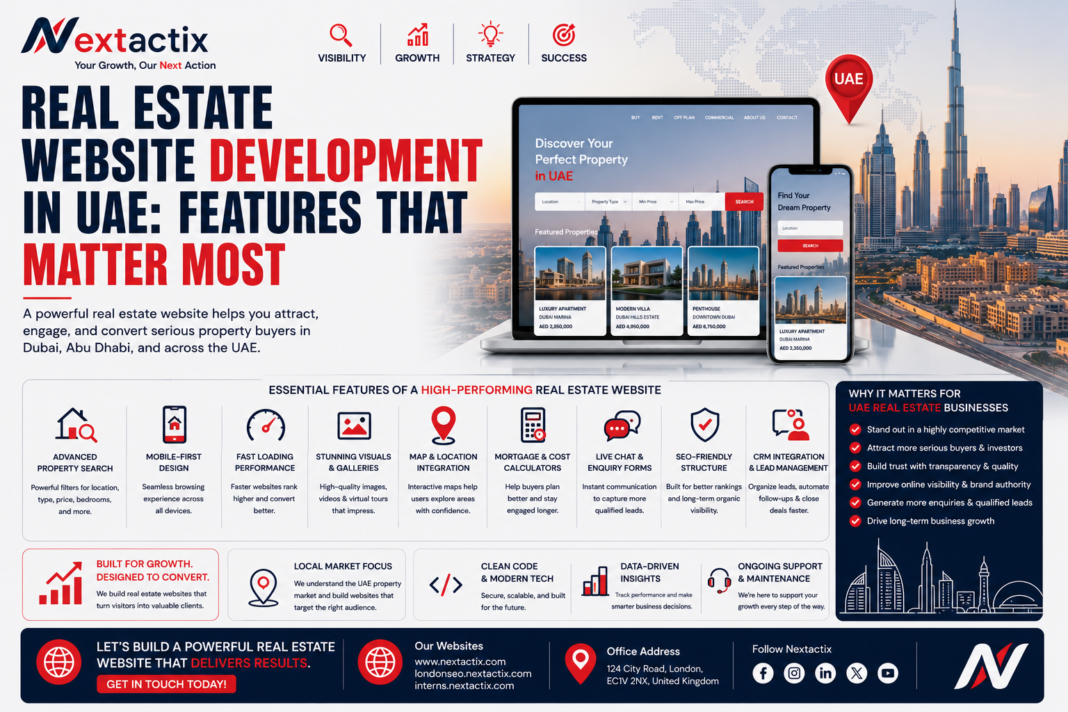
Real estate website development in the UAE has changed significantly over the last few years. Property buyers now expect faster browsing, better search experiences, mobile accessibility, and more detailed property information before contacting an agent.
For many real estate businesses, the website has become one of the most important sales tools they own.
In highly competitive markets such as Dubai and Abu Dhabi, businesses with poorly structured websites often lose potential leads before conversations even begin. Buyers compare multiple agencies online, and the overall website experience strongly influences which companies appear more trustworthy.
Modern real estate website development is no longer only about appearance. The features built into the website directly affect:
- user experience
- search visibility
- lead generation
- customer trust
The websites performing best in the UAE market usually focus on simplicity, speed, and usability rather than unnecessary complexity.
Property Search Experience Is Critical
One of the most important features of a modern real estate website is property search functionality.
Users want to find relevant properties quickly.
A good search system usually allows filtering by:
- property type
- budget
- location
- bedrooms
- furnished status
- property category
Without proper filtering, users often leave websites quickly because browsing becomes frustrating.
Smooth search experiences help users stay engaged longer and improve enquiry rates.
Mobile-First Website Development
Most users searching for properties in the UAE now browse on mobile devices.
People search while:
- traveling
- visiting properties
- comparing locations
- speaking with agents
Because of this, modern real estate websites must be designed mobile-first.
Mobile-friendly development focuses on:
- responsive layouts
- fast page loading
- easy navigation
- simplified interfaces
A website that performs poorly on mobile often loses both rankings and leads.
Google also prioritizes mobile usability in search visibility.
Fast Website Performance
Real estate websites usually contain heavy visual content.
Large property galleries, videos, and interactive maps can slow websites dramatically if not optimized correctly.
Fast performance matters because users rarely wait for slow pages.
A fast website improves:
- user engagement
- lead generation
- search rankings
- browsing experience
Modern real estate development focuses heavily on speed optimization because even a few seconds of delay can reduce conversions.
High-Quality Property Presentation
Visual presentation strongly influences how users perceive a property business.
Professional real estate websites usually include:
- high-quality images
- organized property galleries
- clean layouts
- easy-to-read descriptions
The goal is not simply to display listings, but to create a smoother browsing experience that feels trustworthy and professional.
Luxury property markets in Dubai especially rely heavily on visual quality.
SEO-Friendly Website Structure
Many real estate businesses invest in website design but ignore Real Estate SEO structure.
This creates a problem because users generally discover properties through Google searches first.
SEO-friendly website development helps improve visibility for searches related to:
- apartments in Dubai
- villas for sale UAE
- property investment Dubai
- real estate agency Abu Dhabi
SEO-focused development usually includes:
- structured URLs
- location pages
- internal linking
- optimized page speed
- mobile usability
Strong SEO foundations support long-term organic traffic.
CRM and Lead Management Integration
Modern real estate websites increasingly integrate CRM systems.
This helps businesses:
- manage enquiries
- track leads
- organize customer communication
- automate follow-ups
CRM integration improves operational efficiency and lead management.
As enquiry volume increases, organized systems become more important.
Interactive Features Improve Engagement
Modern websites increasingly include interactive tools such as:
- mortgage calculators
- virtual tours
- live chat systems
- map integrations
- booking forms
These features improve user engagement and help websites feel more useful.
Interactive systems also encourage users to stay on the website longer.
Trust and Transparency Features
Property buyers often research businesses carefully before making contact.
Modern real estate websites help build trust through:
- clear company information
- verified listings
- transparent contact details
- testimonials
- market insights
Professional structure and clear communication influence user confidence significantly.
Area-Based Content Matters
Many successful UAE real estate websites now create area-focused content around:
- Dubai Marina
- Downtown Dubai
- Palm Jumeirah
- Business Bay
- Abu Dhabi communities
This helps both users and search engines understand property relevance more clearly.
Area-focused pages also improve local SEO visibility.
AI and Modern Real Estate Websites
AI-driven systems are beginning to influence real estate development more heavily.
Modern platforms increasingly use:
- AI recommendations
- predictive property suggestions
- chatbot systems
- automated lead qualification
As technology evolves, user expectations continue increasing.
Websites that adapt early often gain competitive advantages.
Security and Stability
Security remains essential because real estate websites handle:
- user information
- enquiry forms
- CRM systems
- account access
Modern development focuses heavily on:
- secure hosting
- data protection
- reliable uptime
- stable infrastructure
Technical stability supports both trust and operational consistency.
Why User Experience Matters More Than Design Alone
Many websites focus heavily on appearance while ignoring usability.
In reality, user experience often matters more than visual complexity.
Good user experience means:
- users find properties quickly
- pages load fast
- navigation feels simple
- information is easy to understand
The easiest websites to use often generate the best results.
Final Thoughts
Real estate website development in the UAE now focuses heavily on usability, speed, SEO, and user engagement rather than simple visual design.
Websites that prioritize mobile optimization, search functionality, technical performance, and trust-building features are generally better positioned to generate leads and maintain stronger online visibility.
As competition continues growing across UAE property markets, businesses investing in better website experiences are more likely to attract serious buyers and maintain long-term digital growth.