


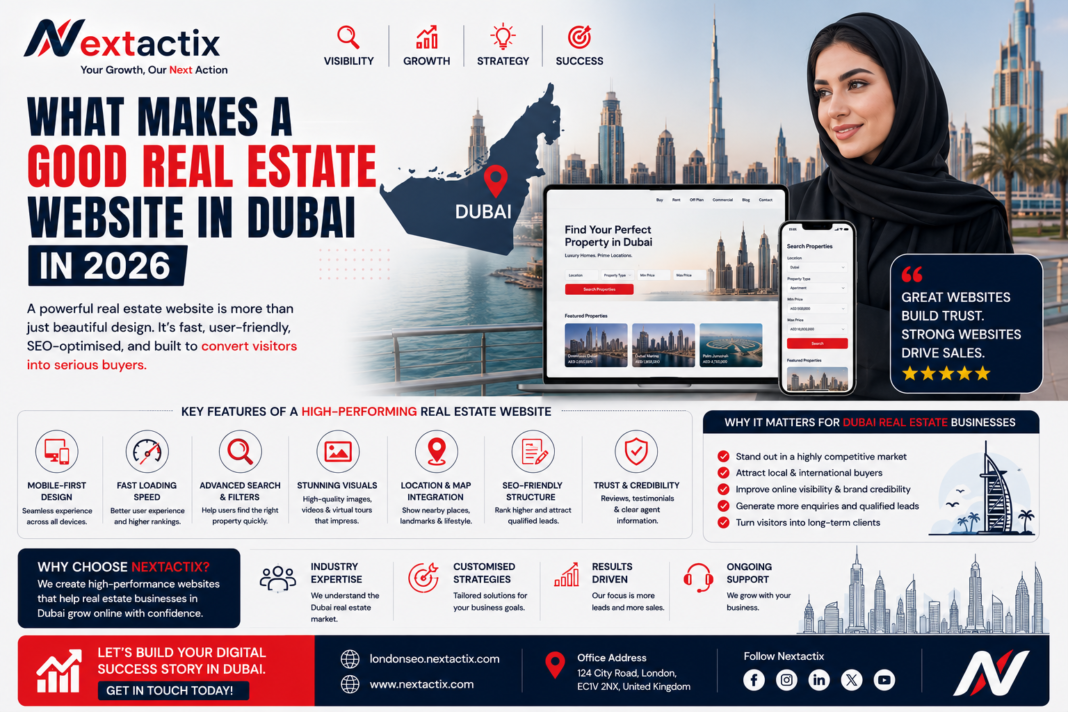
Dubai’s real estate market continues growing rapidly, attracting buyers, investors, and property developers from around the world. As competition increases across residential, commercial, and luxury property sectors, real estate businesses are relying more heavily on digital visibility to attract serious buyers.
For many agencies and developers, the website has become the first point of interaction between the business and potential clients. Before someone makes an enquiry, schedules a viewing, or contacts an agent, they usually visit the website first.
This is why real estate websites in Dubai are no longer viewed as simple online brochures. They now function as lead-generation platforms, trust-building tools, and digital sales environments.
A good real estate website in 2026 is not only visually attractive. It also needs to be fast, easy to navigate, mobile-friendly, and structured around how modern users search for property online.
The Dubai Property Market Is Highly Competitive
Dubai’s property market contains thousands of competing listings across apartments, villas, off-plan projects, luxury properties, and commercial spaces. Buyers often compare multiple websites before contacting an agent.
Because of this, businesses with poorly structured websites usually struggle to hold user attention.
Modern users expect:
- fast loading pages
- clean layouts
- clear property information
- mobile accessibility
- high-quality visuals
If a website feels slow or confusing, most users leave quickly and continue searching elsewhere.
This behavior directly affects both lead generation and search visibility.
User Experience Matters More Than Ever
One of the biggest changes in modern real estate websites is the focus on user experience.
People searching for property usually want information quickly. They do not want to struggle through cluttered menus, slow pages, or confusing navigation.
Good websites guide visitors naturally.
When users visit a property website in Dubai, they typically want to:
- browse listings easily
- filter properties quickly
- view high-quality images
- check locations
- contact an agent without difficulty
Websites that simplify this process generally perform much better.
A good user experience also improves trust.
Buyers often associate website quality with business professionalism. A modern, responsive website creates a stronger first impression than an outdated or poorly structured platform.
Mobile Optimization Is Essential
Most property searches now happen on mobile devices.
People browse listings while:
- commuting
- visiting locations
- comparing properties
- speaking with agents
A website that works perfectly on desktop but poorly on mobile loses a large amount of potential traffic.
Modern real estate websites in Dubai are designed mobile-first. This means:
- responsive layouts
- fast mobile loading
- easy scrolling
- simplified navigation
- quick property filtering
Google also prioritizes mobile-friendly websites in search results.
This means mobile optimization affects both rankings and lead generation.
Property Search and Filtering Systems
One feature that separates strong real estate websites from weak ones is the search experience.
Users expect advanced filtering options that allow them to narrow down listings quickly.
Modern property websites often include filters for:
- location
- budget
- property type
- bedrooms
- furnished status
- off-plan projects
Without proper filtering systems, users often become frustrated and leave the website.
The easier it is for users to find relevant properties, the higher the chances of generating enquiries.
Website Speed Influences Leads
Website speed has become one of the most important parts of modern real estate development.
Property websites often contain:
- large images
- videos
- interactive maps
- multiple listings
Without optimization, these elements slow websites significantly.
A slow website hurts:
- user engagement
- search rankings
- lead conversion
Most users leave websites that take too long to load.
Fast websites create smoother browsing experiences and improve visibility in search engines.
High-Quality Visual Presentation
Real estate is highly visual.
Property buyers expect:
- professional images
- clean layouts
- organized galleries
- immersive browsing experiences
Good real estate websites present properties clearly without overwhelming users.
In Dubai’s luxury property market especially, visual presentation strongly influences user perception.
The goal is not simply to display images, but to create a professional browsing experience that builds trust and interest.
SEO and Search Visibility
A good real estate website also needs strong SEO foundations.
Many businesses invest heavily in property listings but ignore search optimization.
This creates a problem because users usually begin their property search on Google.
Real estate SEO helps websites appear for searches such as:
- apartments in Dubai
- villas for sale Dubai
- off-plan properties UAE
- real estate agency Dubai
SEO-friendly websites focus on:
- structured page architecture
- fast loading performance
- internal linking
- location-focused pages
- informative content
Strong SEO improves long-term visibility and reduces dependence on paid ads.
Why Trust Signals Matter
Buying property is a major financial decision.
Users often evaluate trust before contacting an agency.
Good real estate websites help build trust through:
- professional design
- agent information
- clear contact details
- testimonials
- market information
- transparent property details
Small details influence how trustworthy the business appears.
Many users compare multiple websites before making enquiries.
Websites that feel more reliable usually generate stronger conversion rates.
Integration with Maps and Location Data
Location is one of the most important factors in property decisions.
Modern real estate websites often integrate:
- Google Maps
- area guides
- nearby landmarks
- community information
This helps users understand the property environment better.
In Dubai especially, location-focused browsing plays a major role because buyers often compare neighborhoods carefully.
Real Estate Websites Are Becoming More Interactive
Modern property websites are moving beyond static listing pages.
Newer websites increasingly include:
- virtual tours
- live chat systems
- AI-based recommendations
- mortgage calculators
- booking systems
These tools improve engagement and make websites feel more useful.
As competition increases, businesses that invest in interactive experiences often stand out more.
Content Is Becoming More Important
Many real estate websites only focus on listings.
However, content is becoming increasingly valuable for:
- SEO visibility
- buyer education
- trust building
- market authority
Blogs, guides, and area-based content help websites attract traffic before users are ready to buy.
For example:
- Dubai property investment guides
- off-plan buying advice
- neighborhood comparisons
- market trends
This type of content helps strengthen long-term visibility.
Security and Technical Stability
Modern websites also need strong technical foundations.
Real estate websites manage:
- user forms
- enquiries
- contact information
- listing systems
Security, uptime, and technical stability influence both user trust and operational reliability.
A good website should remain:
- secure
- stable
- scalable
- easy to maintain
Technical issues often reduce both rankings and user trust.
Final Thoughts
A good real estate website in Dubai in 2026 is much more than a digital property catalogue. It functions as a lead-generation system, a trust-building platform, and an important part of long-term business growth.
Websites that focus on user experience, speed, SEO, mobile accessibility, and structured property presentation are generally better positioned to compete in Dubai’s growing real estate market.
As digital competition continues increasing, businesses investing in better website experiences are likely to generate stronger visibility, better engagement, and more qualified property leads over time.